


Animal Division
Animal Division
Decoding the Laws of Life and Death
Creating a Future of Planetary Symbiosis and Human Biological Transcendence
Life has spun an eternal history spanning approximately four billion years. Yet, if we focus on the individual, each lifespan is fleeting and strictly limited. Why, then, does life strive to live its finite time to the absolute fullest, despite inherently containing its own death? To approach this fundamental question, we shine a light on the unique individuality and behaviors of a diverse range of animals living in the wild.
Guided by Tinbergen’s Four Questions [1], we seek a multi-layered understanding of animals’ “drive to live” and aim to unravel the underlying laws of life and death. Understanding these rules hidden within the natural world will do more than just redefine the symbiosis between life and the Earth; it will serve as the very foundation for humanity to deeply recognize our own biological constraints—and ultimately create a new future that transcends them.
Overview
- Marine Animals Group
- Unlocking the origins and evolutionary diversity of life through the analysis of marine nvironments and animal responses
- Shunsuke Yaguchi, Ph.D.
Professor, Institute of Life and Environmental Sciences 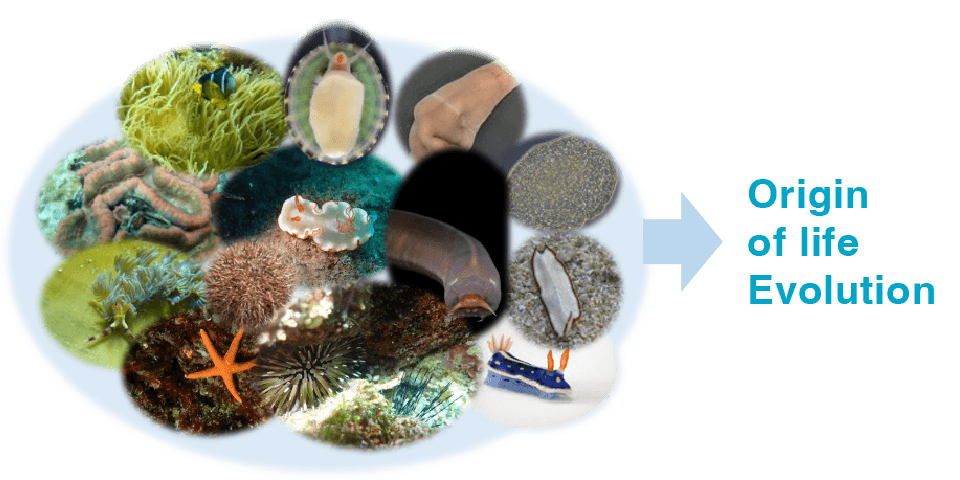
- Arthropods Group
- Paving the way for agriculture, ecosystem services, and biotechnology through understanding animal morphology, ecology, and behavior in response to environmental changes
- Tomoyuki Yokoi, Ph.D.
Associate Professor, Institute of Life and Environmental Sciences 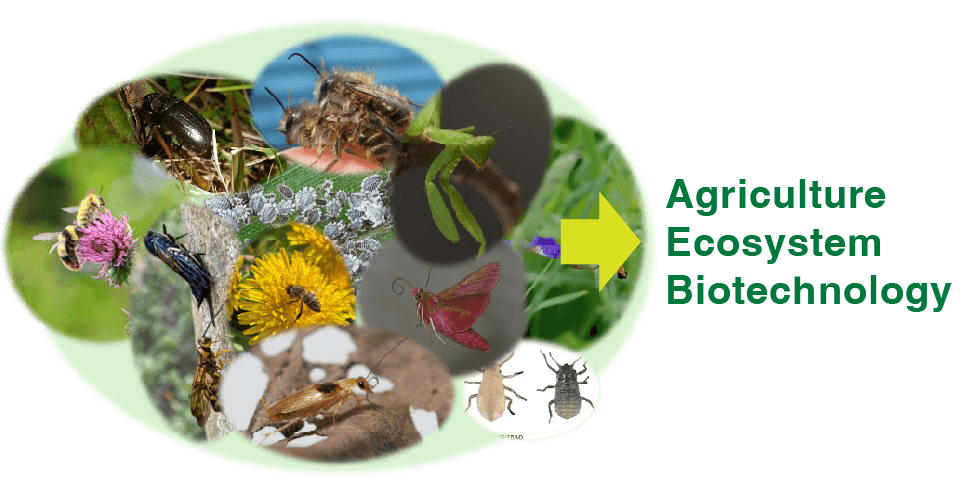
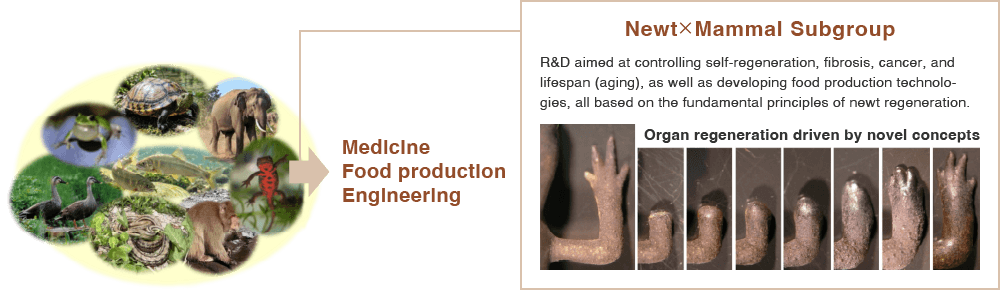
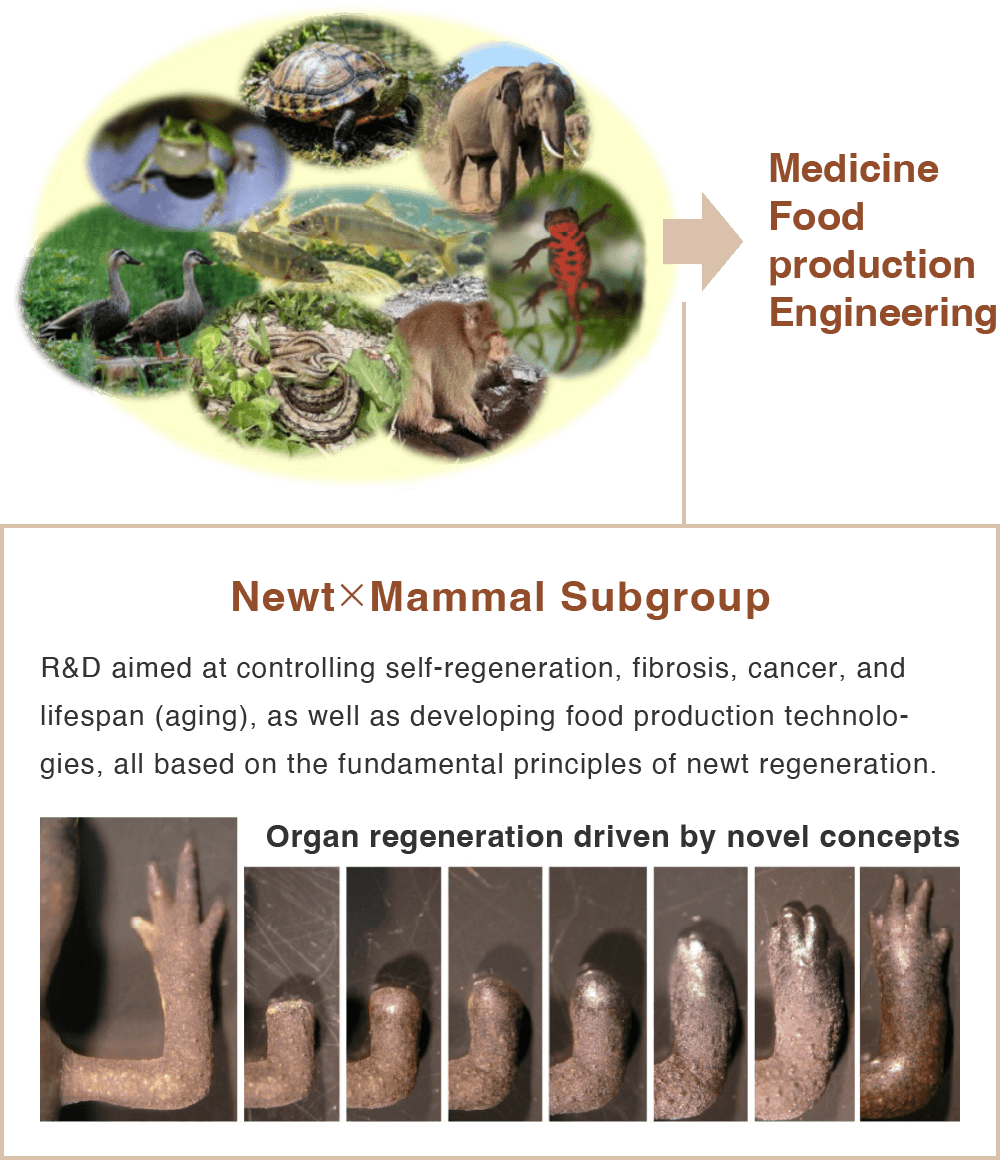
- Vertebrates Group
- Applying the behavioral principles and survival strategies of animals in response to environmental changes to innovative medicine, food production, and engineering technologies
- Chikafumi Chiba, Ph.D.
Professor, Institute of Life and Environmental Sciences -
Tinbergen’s Four Questions
Four analytical perspectives proposed by ethologist Nikolaas Tinbergen, essential for understanding biological phenomena. They comprise: how a reaction or behavior is triggered (Mechanism/Causation), when and through what developmental process it is formed (Ontogeny/Development), what meaning or function it holds for the individual (Adaptive Value/Function), and why that behavior was selected through the process of evolution (Phylogeny/Evolution).
Nikolaas Tinbergen, On aims and methods of Ethology. Zeitschrift für Tierpsychologie 20(4),410-433, 1963.
Structure & Members
Research is conducted by organizing subgroups for each specific project.
- Marine Animals Group
- Institute of Life and Environmental Sciences: Shunsuke Yaguchi,
Keisuke Sakurai, Yasunori Sasakura,
Daichi Suzuki, Aoi Tsuyuki,
Hiroaki Nakano, Ben Harvey,
Yoshiaki Morino, Hiroshi Wada
- Arthropods Group
- Institute of Life and Environmental Sciences: Tomoyuki Yokoi,
Kazuharu Ohashi, Kazumu Kuramitsu,
Keisuke Sakurai, Yukie Sato,
Kyoichi Sawamura, Masaki Takenaka,
Yosuke Degawa, Mari Fujita,
Seiichi Furukawa, Shota Masumoto,
Shigeru Matsuyama, Kensuke Yahata
Tsukuba Advanced Research Alliance (TARA) / Life Science Center for Survival Dynamics: Yuko Shimada,
Ryusuke Niwa, Shunta Yorimoto
Institute of Human Sciences: Yoko Yamamoto
- Vertebrates Group
- Institute of Life and Environmental Sciences: Takashi Kamijo,
Masaki Takenaka, Yoshiaki Tsuda,
Masanao Honda
Institute of Art and Design: Kiyoto Sawada
Institute of Systems and Information Engineering: Ikkyu Aihara, Takayuki Niizato
- Newt×Mammal Subgroup
- Institute of Life and Environmental Sciences: Chikafumi Chiba,
Martin Miguel Casco-Robles,
Keisuke Sakurai, Shota Shiga,
Fumiaki Maruo, Kensuke Yahata
Institute of Medicine: Shinichi Fukuda, Ryo Fujita
University of Tsukuba Hospital: Kuniharu Tasaki